
Ultrasound in Sports — Why It’s Crucial for Diagnosis and Return to Training
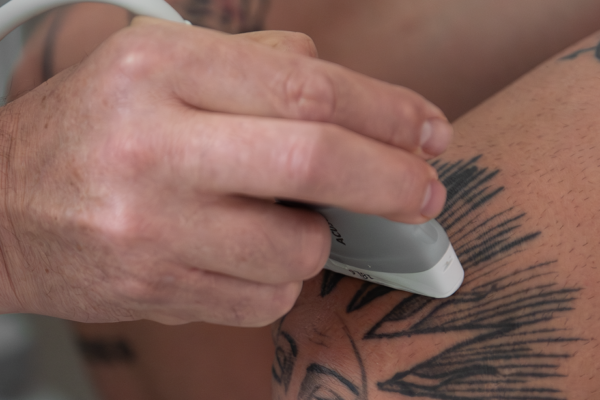
Ultrasound (USG) has become one of the most valuable tools for diagnosing sports injuries in recent years. It is fast, accurate, accessible, and allows the physician to visualize tissues in real time—even during movement. This enables the detection of issues that other imaging methods might miss.
USG is highly effective for typical sports injuries
Ultrasound excels particularly in evaluating soft tissues, which are most commonly affected in sports. Typical diagnoses include:
- Muscle tears and strains — allows precise determination of the extent of damage and monitoring of the healing process.
- Tendinopathies — such as of the Achilles tendon, patellar tendon, or rotator cuff. USG can visualize tendon structure, inflammation, and degenerative changes.
- Ligament sprains — typically in the knee or ankle area. Ultrasound can also detect smaller partial injuries.
- Bursitis and effusions — rapid identification of inflammation or fluid accumulation in joints.
- Scars from previous injuries — USG helps assess whether old injuries affect current performance or cause recurring pain.
The key role of USG in deciding on return to training
One of the greatest advantages of ultrasound is the ability to objectively assess whether tissue has truly healed—even when the athlete subjectively feels less pain.
USG can:
- evaluate healing quality,
- detect tissue blood flow, indicating inflammatory activity,
- reveal residual tears that could pose a risk during premature return.
The results thus provide physicians and coaches with a strong argument when deciding on return-to-play. The athlete can return to training safely and with a lower risk of recurrence.