
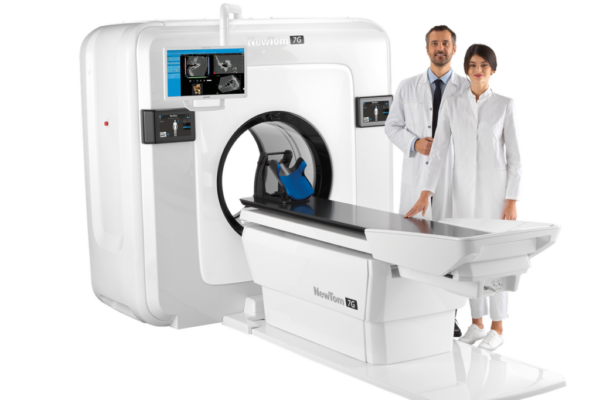
Modern ENT diagnostics increasingly relies on advanced imaging methods that enable more precise, faster, and gentler patient examination. One of the most significant innovations in this field is CBCT (Cone Beam Computed Tomography), specifically the 7G NewTom device, which represents the pinnacle of 3D head and neck imaging.
What is CBCT?
CBCT is a type of computed tomography that uses a cone-shaped X-ray beam to create a three-dimensional image of the examined area. Unlike conventional CT, CBCT provides:
- higher spatial resolution,
- lower radiation dose,
- faster scanning.
Why 7G NewTom?
The 7G NewTom device is among the most advanced CBCT systems in the world. In ENT diagnostics, it offers several key advantages:
High Detail Resolution
The 7G NewTom enables imaging of very fine anatomical structures, such as auditory ossicles, bony walls of the paranasal sinuses, and internal structures of the middle and inner ear. This is extremely important for diagnosing chronic inflammations, cholesteatomas, malformations, and fractures.
Low Radiation Dose
Compared to conventional CT, the radiation dose with CBCT is significantly lower, which is especially beneficial for pediatric patients, repeated check-ups, and preventive diagnostics. The 7G NewTom also applies the ALARA principle (As Low As Reasonably Achievable), minimizing the dose while maintaining diagnostic quality.
3D Imaging Without Distortion
CBCT provides true 3D imaging without geometric distortion. The physician can rotate the image in space, make precise cuts in any plane, and measure distances and volumes. This is crucial for planning surgeries in the sinus and nasal passage area.
Main ENT Indications
Paranasal sinus diagnostics — CBCT is now considered the gold standard. It enables precise detection of polyps, cysts, mucosal thickening, and anatomical variants that may cause chronic problems.
Precise middle and inner ear diagnostics — assessment of small middle ear ossicles, endocochlear implant evaluation, otosclerosis detection, mastoid pneumatization evaluation, and trauma diagnostics.
Fast and comfortable examination — the 7G NewTom examination takes only a few seconds, is non-invasive, painless, and does not require contrast agent.
Conclusion
CBCT examination using the 7G NewTom device represents a modern, precise, and gentle imaging method in ENT diagnostics. Thanks to high resolution, low radiation dose, and 3D imaging, it provides physicians with an invaluable tool for accurate diagnostics and treatment planning.
For the patient, CBCT means a quick examination, greater safety, more precise diagnosis — and thus more effective treatment. CBCT is now among the most important imaging methods in modern otorhinolaryngology.